Severe hip pain can significantly limit mobility and affect daily activities such as walking, sitting, and climbing stairs. For patients with advanced joint damage that no longer responds to medication or physiotherapy, total hip replacement surgery in Delhi can provide long-term pain relief and restore joint function.
Total hip replacement, also called total hip arthroplasty, is a surgical procedure in which the damaged parts of the hip joint are replaced with artificial implants designed to replicate the natural movement of the joint. The surgery is commonly recommended for patients with severe arthritis, hip fractures, or degenerative joint disease.
Advances in orthopedic technology have made hip replacement surgery safer and more effective than ever. Modern implants and surgical techniques allow patients to experience improved mobility, reduced pain, and better quality of life. Many individuals regain the ability to perform daily activities comfortably within weeks after surgery.
At MASSH Super Speciality Hospital, Chirag Enclave, orthopedic specialists provide comprehensive evaluation and advanced treatment options for patients requiring hip joint replacement surgery.
If persistent hip pain is affecting your daily life or limiting your mobility, consulting an orthopedic specialist early can help you find the right treatment and prevent the condition from worsening.
Book a consultation with our orthopedic expert today to discuss your symptoms and explore the best treatment options for lasting relief.
📞 Call Now: +91-7290975999
📅 Book Appointment Online
The hip is one of the largest weight-bearing joints in the human body. It is a ball-and-socket joint formed by:
• The femoral head (ball) at the top of the thigh bone
• The acetabulum (socket) in the pelvic bone
The joint is covered with cartilage, a smooth tissue that allows bones to move easily without friction. Synovial fluid lubricates the joint, while surrounding muscles and ligaments provide stability.
Over time, conditions such as arthritis or injury can damage this cartilage. When the protective cartilage wears away, the bones begin to rub against each other, leading to pain, stiffness, swelling, and reduced mobility.
In advanced cases, joint damage becomes severe enough that surgical replacement of the joint may be necessary.
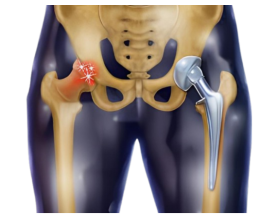
Total hip replacement surgery is a procedure in which the damaged components of the hip joint are replaced with artificial implants.
During the surgery:
• The damaged femoral head is removed
• The hip socket is replaced with a prosthetic cup
• A metal stem is inserted into the thigh bone
• A prosthetic ball replaces the natural femoral head
These artificial components are typically made from metal, ceramic, or medical-grade plastic materials designed for durability and smooth movement.
The goal of the procedure is to:
• Reduce pain caused by joint damage
• Restore normal hip movement
• Improve the patient’s ability to walk and perform daily activities
Hip replacement surgery has become one of the most successful orthopedic procedures for treating severe joint disease.
Doctors may recommend total hip replacement surgery in Delhi when the hip joint is severely damaged and non-surgical treatments no longer provide relief.
This is the most common cause of hip replacement. Osteoarthritis occurs when cartilage gradually wears away due to aging and joint wear.
An autoimmune condition that causes inflammation of the joints, leading to progressive cartilage damage.
Severe fractures of the hip joint can sometimes require joint replacement to restore mobility.
This condition occurs when blood supply to the femoral head is disrupted, causing bone tissue to collapse.
Joint damage caused by previous injuries or fractures may eventually lead to arthritis.
When these conditions cause persistent pain and functional limitations, surgery may be considered the most effective treatment.
Patients may benefit from hip replacement surgery if they experience:
• Persistent hip pain during walking or movement
• Pain that continues even while resting
• Stiffness in the hip joint
• Difficulty climbing stairs
• Reduced range of motion
• Difficulty standing or sitting for long periods
• Lack of improvement with medications or physiotherapy
A comprehensive evaluation by an orthopedic specialist helps determine whether hip replacement surgery is appropriate
Depending on the patient’s condition, surgeons may recommend different types of hip replacement procedures.
The entire hip joint is replaced with artificial components.
Only the femoral head is replaced while the socket remains intact.
A second surgery performed when a previous hip implant needs replacement due to wear or complications.
The choice of procedure depends on the patient’s age, bone quality, and severity of joint damage.
Understanding the treatment journey can help patients feel more confident about undergoing hip replacement surgery.
The orthopedic specialist evaluates the patient’s symptoms, medical history, and imaging scans such as X-rays or MRI to determine the severity of joint damage.
Doctors often recommend conservative treatments first, including:
• Pain medications
• Physiotherapy
• Lifestyle modifications
• Joint injections
If these treatments fail to provide relief, surgery may be recommended.
Before surgery, patients undergo medical evaluation including:
• Blood tests
• Cardiac assessment
• Imaging studies
• Medical clearance
During surgery, the damaged hip joint is replaced with artificial implants designed to restore smooth movement.
The procedure usually takes 1–2 hours, depending on the complexity of the case.
Patients are encouraged to start gentle movement and walking with assistance within 24 hours after surgery, which helps improve circulation and reduce complications.
Rehabilitation exercises help strengthen muscles and restore joint movement. Full recovery may take several months depending on the patient’s overall health and rehabilitation progress.
Many patients resume routine activities within 4–6 weeks after surgery.
Complete recovery may take 3–6 months, although improvement may continue for up to a year.
Most patients experience significant improvement in mobility and quality of life after hip replacement.
Activities that are generally recommended after recovery include:
• Walking
• Swimming
• Cycling
• Low-impact exercise
High-impact sports may need to be avoided to protect the artificial joint.
With proper care and rehabilitation, many hip replacement implants can last 15–20 years or longer.
Hip replacement surgery is typically performed in a specialized operating theatre by an orthopedic surgeon.
Step 1: Anesthesia: Patients receive spinal anesthesia or general anesthesia to ensure comfort during the procedure.
Step 2: Surgical Incision: The surgeon makes an incision near the hip joint to access the damaged area.
Step 3: Removal of Damaged Bone and Cartilage: The damaged femoral head and cartilage are removed.
Step 4: Implant Placement: The surgeon places a prosthetic socket into the hip bone and inserts a metal stem into the thigh bone.
Step 5: Joint Reconstruction: A prosthetic ball is attached to the stem, creating a new artificial hip joint.
Step 6: Closure: The incision is closed with sutures or staples, and sterile dressings are applied.
The surgery usually takes 1 to 2 hours, depending on the complexity of the case.
Hip replacement surgery offers several benefits for patients suffering from severe joint damage.
Key advantages include:
• Significant reduction in chronic hip pain
• Improved mobility and flexibility
• Ability to walk, climb stairs, and perform daily tasks
• Better joint stability and alignment
• Improved overall quality of life
Many patients experience dramatic improvement in symptoms after surgery, especially pain and stiffness.
Like any surgical procedure, hip replacement surgery carries certain risks.
Possible complications include:
• Infection around the implant
• Blood clots in the legs or lungs
• Dislocation of the artificial joint
• Implant loosening over time
• Nerve or blood vessel injury
Although these complications are uncommon, proper surgical planning and post-operative care help reduce risks.
Patients with underlying conditions such as diabetes or hypertension may have a slightly higher risk of infection, making pre-surgical evaluation important.
The cost of total hip replacement surgery in Delhi can vary depending on several factors, including the type of implant used, hospital facilities, surgeon expertise, and the patient’s medical condition.
Typical factors influencing cost include:
• Type of hip implant (ceramic, metal, or polyethylene)
• Surgical technique used
• Hospital infrastructure and ICU support
• Length of hospital stay
• Rehabilitation and physiotherapy services
• Pre-operative tests and post-operative care
While the exact cost varies for each patient, hospitals usually provide a detailed treatment estimate after clinical evaluation.
Many hospitals also offer:
• Cashless insurance facilities
• TPA support
• EMI or financial assistance options
Patients are advised to consult an orthopedic specialist to understand the most suitable treatment plan and associated costs.
Dr. Abhishek Bansal
FRCS, MRCS, DNB, MS, MBBS
Orthopedic Specialist
MASSH Super Speciality Hospital
Dr. Abhishek Bansal has more than 20 years of experience in orthopedic and joint replacement surgery, specializing in advanced hip and knee procedures aimed at restoring mobility and improving patient outcomes.
Disclaimer:
This content is provided for educational purposes and should not replace professional medical consultation.
Embark on a journey of exceptional healthcare guided by industry's true luminaries who consistently exceed
expectations and set new benchmarks for excellence in everything from cutting-edge innovations to personalized care.

Sr. Consultant - Orthopaedics, Joint, Spine & Sports Injury
South Delhi

 Book Appointment

Head of Department - Orthopaedics, Trauma, Spine & Sports Injury
Noida
Book Appointment

Senior Consultant - Orthopaedics, Joint Replacement, Spine & Sports Injury
Ludhiana
Book Appointment
MASSH Group of Hospitals is a trusted name in delivering advanced healthcare solutions with a network of premier super speciality hospitals, committed to providing ethical, compassionate, and innovative care. Our expanding network ensures that cutting-edge medical services are always within your reach.
Yes, hip replacement surgery is generally considered a safe and effective procedure when performed by experienced orthopedic surgeons. Most patients experience significant reduction in pain and improved mobility after surgery.
The procedure usually takes one to two hours, although total time in the operating room may be longer due to anesthesia and preparation.
Patients are usually encouraged to start walking with assistance within 24 hours after surgery to improve circulation and begin rehabilitation.
Most patients gradually return to daily activities within 4–6 weeks, while complete recovery may take several months depending on individual healing and physiotherapy progress.
Modern hip implants can last 15–20 years or longer, depending on factors such as activity level, weight, and implant type.
Common conditions include osteoarthritis, rheumatoid arthritis, avascular necrosis, hip fractures, and severe joint damage that limits daily activities.















































 Explore More

 Quick Enquiry
  Call(24*7)