Written by MASSH
Mar 16, 2026
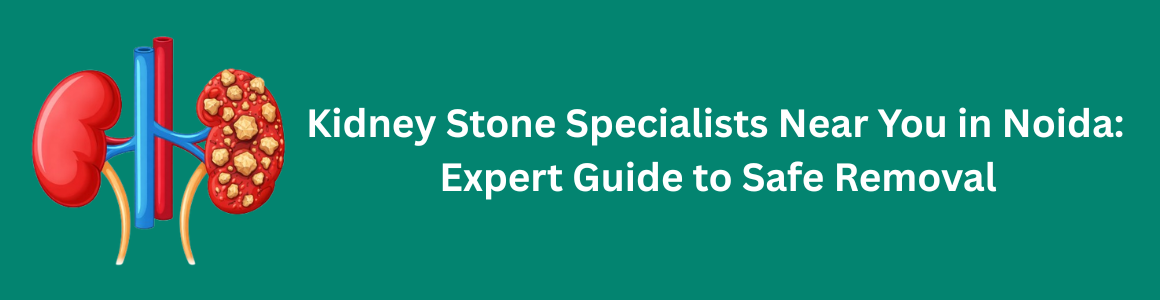
Kidney stones are highly common in Noida, with some studies showing that 1 in every 7 people in the city has the condition. The high incidence mirrors that of the average found in North Indian states like Uttar Pradesh, Delhi NCR, Bihar, Jharkhand, and Punjab.
The primary cause for the increased incidence of kidney stones in the region is due to a number of factors, including, but not limited to, poor dietary habits, rising stress levels, sedentary lifestyle, and obesity. The risk of the condition in places like Noida has significantly increased among people between the ages of 25 and 40.
Kidney stones can be very painful and often require adequate treatment in a timely manner to ensure your renal system doesn’t get permanent damage. Kidney stone specialists near you in Noida are highly trained medical professionals who understand the root cause of your kidney stones and offer personalised treatment.
The primary job of kidney stone specialists is to diagnose the stones as early as possible and recommend a safe treatment method for you. In this blog, we’ll discuss how kidney stones are formed, how specialists diagnose them, what you should do for kidney stones of different sizes, and what the best kidney stone removal surgeries available in Noida are.
Kidney stones are crystallised formations inside your kidneys that are formed due to the abundance of certain minerals in your urine. These minerals include calcium, oxalate, and uric acid. Kidney stones can disrupt the functioning of your kidneys and cause intense pain. Kidney stone pain is often considered one of the worst pains experienced by patients who go through it. Untreated kidney stones can cause several complications, including kidney failure, which can be fatal. So, it is crucial that you learn how to identify the early signs of kidney stones and get the right treatment from the kidney stone specialists in Noida.
Kidney stones are formed when there is an excess of minerals in your urine. Generally, urine is able to dissolve the minerals and stop them from crystallising. However, when the extent of the minerals, specifically, calcium, oxalate, and uric acid, exceeds certain levels, the urine’s ability to dilute the minerals goes away. That’s when the kidney stones form by sedimentation and crystallisation over time. It is important to note that kidney stones take time to form and are asymptomatic until they reach a certain size, where they start disrupting your kidney’s functioning, or they are traveling down your urinary tract.
The common causes and risk factors of kidney stones are as follows:
Kidney stones often show many symptoms when they start blocking the urinary tract. Even though pain is the most important and common symptom of a kidney stone, there are other symptoms you must know about. A complete understanding of common symptoms can help you visit a kidney stone specialist at the earliest and start your treatment.
You should visit a kidney stone specialist in Noida as soon as possible if:
These symptoms should not be ignored and warrant a medical visit to a kidney stone specialist in Noida. It is important to note that kidney stone diagnosis at early stages can help patients prevent pain and avail themselves of non-surgical treatments.
Kidney stone diagnosis follows a three-step process. Blood work, urinalysis, and imaging tests. These three tests provide a complete picture of a patient’s health.
The method of diagnosis may also include a physical examination by the specialists, where they examine the abdomen, back, and flank region of the patient. This is done to check for inflammation and tenderness in the body.
Based on the size of the kidney stones, kidney stone specialists in Noida recommend different treatment options. Larger stones require advanced surgical treatment, while smaller stones can even be treated with lifestyle and dietary changes.
| Stone Size | Treatment Recommendation |
| <4 mm | Can pass naturally with increased hydration |
| <6 mm and >4 mm | Can pass with medicinal treatment and active monitoring |
| <10 mm and >6 mm | Requires surgical intervention such as ureteroscopy or lithotripsy |
| >10 mm | Requires advanced kidney stone surgical interventions, such as RIRS or PCNL. |
Kidney stones are a complex medical condition that requires specialised medical treatment. As a result, patients must choose a specialist to get the right treatment. A kidney stone specialist in Noida can help patients get the right treatment without putting the patient's health at risk. But what medical specialty is practiced by kidney stone specialists? Kidney stone specialist is not a branch of medicine, so kidney stone specialists are often urologists or nephrologists. Here’s a breakdown of what it takes to be a kidney stone specialist.
A kidney stone specialist can be either a nephrologist or a urologist. This is mainly because kidney stones fall under the purview of both nephrology and urology. When you choose to get your treatment from a reliable healthcare institution for kidney stones, hospitals like the MASSH MANAS Super Speciality Hospital offer a medical team comprising both. But why a nephrologist and urologist? This is because:
Now onto a different question, when do you visit a kidney stone surgeon?
You should visit a kidney stone surgeon only after getting a complete diagnosis of kidney stones. This is because surgeons do not specialise in the diagnostic process. So, after a diagnosis, when should you contact a kidney stone surgeon? You should connect with a surgeon if you have kidney stones that are larger than 6 mm in size. This is because stones larger than 6 mm require surgical intervention. Stones less than 6 mm in size do not require surgical intervention generally.
The treatment recommended is often linked with the stone size and overall patient health. Here are the most common treatment options for kidney stones in Noida, available at the MASSH MANAS Super Speciality Hospital.
For smaller stones, increased hydration and dietary changes are often enough to get the stones to pass naturally out of your body. This is the easiest treatment option for kidney stones and is often the safest since it doesn’t involve using any medication or surgery.
Medications are recommended for the treatment of kidney stones that are moderate in size. Certain medications, like NSAIDs, potassium citrate, and alpha blockers, are used to ease the pain from kidney stones, relax the ureters for the kidney stones to pass, and dissolve kidney stones as much as possible.
There are numerous surgical options for kidney stone treatment. Larger stones that cannot safely travel down your ureter are best removed via surgery. This protects your kidneys and ureters from scarring and damage caused by the movement of large kidney stones in your body.
There are four specific reasons why the MASSH MANAS Super Speciality Hospital stands out as the best medical institution for kidney stone treatment in Noida. The four reasons are:
1. What are the early signs of kidney stones?
The early signs of kidney stones generally start with sharp flank or lower back pain. Common kidney stone symptoms apart from pain include pain while urinating, increased urinary urgency and frequency, and blood in urine. If you notice blood in your urine repeatedly, be sure to get immediate medical attention, as it is a serious medical symptom.
2. Can kidney stones pass naturally without surgery?
Yes, kidney stones can pass naturally without surgery. This is all the more true for kidney stones that are smaller than 4 mm in size. These stones can pass through your urinary tract without the need for medications, and can be done by increasing your daily water intake. For stones slightly larger than 4 mm, medications like potassium citrate are used to dissolve the stones slightly to make it easier to pass through your urinary tract, without surgery.
3. How long does it take to pass a kidney stone?
Kidney stones can take somewhere between one and four weeks to pass through your urinary tract. The time it takes for the stone to travel depends a lot on the stone's size and location. Kidney stones that are formed inside the kidneys take longer to travel than kidney stones that are formed inside the ureters.
4. What causes kidney stones to form?
Kidney stones form when there are excess minerals in your urine. The minerals, namely calcium, oxalate, or uric acid, have a tendency to bind and crystallise when they sediment in the same place over time. This leads to the formation of kidney stones. Two factors play a major role here: the first is a high level of the minerals mentioned in your body, and the second is chronic dehydration.
5. Are kidney stones more common in men or women?
Kidney stones are more common in men than in women. The increased risk is often tied to dietary and lifestyle factors. Regular consumption of alcohol, smoking, a sedentary lifestyle, and stress play an important role in the higher risk of kidney stones among men.
6. What tests are used to diagnose kidney stones?
Kidney stones are diagnosed using blood tests, urinalysis, and imaging tests. The blood tests used for diagnosis are generally ones used to detect the level of calcium, oxalate, or uric acid in your body. The urinalysis is used to understand the level of the mentioned minerals in your urine. The imaging tests are used to visualise the kidney stones in your body.
7. Can dehydration increase the risk of kidney stones?
Dehydration significantly increases the risk of kidney stones in patients. In fact, chronic dehydration is often cited as the number one cause of kidney stones.
8. What foods should be avoided if you have kidney stones?
If you have kidney stones, you should avoid oxalate-rich foods like spinach, nuts, chocolate, and beets. Additionally, you should also keep your sodium-intake in check. Lastly, animal proteins, specifically red meat, should be consumed in moderation or avoided altogether to keep your risk in check.
9. Can kidney stones come back after treatment?
Kidney stones can recur after treatment if patients do not follow the right dietary and lifestyle restrictions. Kidney stone prevention measures must be followed to restrict the risk of kidney stone recurrence.
10. What lifestyle changes help prevent kidney stones?
Lifestyle changes that help prevent kidney stones are specifically lowering your alcohol intake, exercising regularly, following a balanced diet, keeping your body weight in check, and following a good sleep schedule, alongside quitting habits like smoking. These habits can reduce your risk of kidney stones and help you live a healthier life overall.
MASSH-MANAS Urology Team
Our team of highly experienced urologists specializes in advanced urology and minimally invasive kidney stone surgeries. The clinical focus includes the diagnosis and management of complex kidney stones using advanced techniques such as RIRS, ECIRS, and PCNL, along with preventive kidney stone care through lifestyle guidance and metabolic evaluation.
This blog is intended for educational and informational purposes only and should not be considered a substitute for professional medical advice, diagnosis, or treatment. Always consult a qualified kidney stone specialist or urologist for proper evaluation and personalized treatment recommendations.
Know the early symptoms of kidney stones, including severe pain, blood in urine, and nausea. Read about diagnosis, treatment, and prevention tips...
Written by MASSH
Jul 11, 2026
Get expert kidney stone treatment in South Delhi. Explore advanced, minimally invasive surgeries at MASSH Super Speciality Hospital for quick rec...
Written by MASSH
Apr 01, 2026
Laser treatment for kidney stones in Noida: know cost, benefits, procedure, and recovery. Safe, minimally invasive care by expert urologists.
Written by MASSH
Mar 25, 2026



 Quick Enquiry
  Call(24*7)