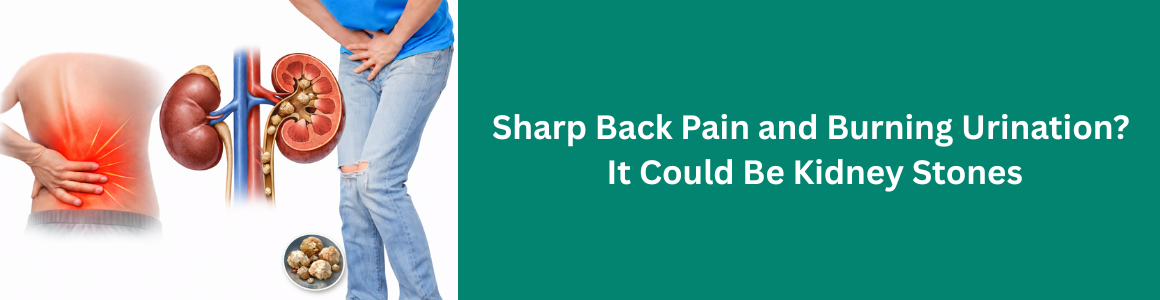
Experiencing sudden sharp back pain along with a burning sensation while urinating can be frightening. Many people initially assume it is a simple urinary infection or muscle strain. However, in many cases, these symptoms may point toward a painful and increasingly common condition — kidney stones.
At MASSH Hospital, our expert urology specialists frequently treat patients who ignore early symptoms and later present with severe discomfort. Early diagnosis and timely treatment can prevent complications and ensure faster recovery.
This comprehensive guide will help you understand kidney stones, their symptoms, causes, risk factors, diagnosis, treatment options, prevention strategies, and when to seek expert care.
Learn more about our Advanced Kidney Stone Treatment
Kidney stones (also known medically as renal calculi or nephrolithiasis) are hard deposits made of minerals and salts that form inside the kidneys. These stones develop when substances in urine — such as calcium, oxalate, and uric acid — become highly concentrated and crystallize.
While small stones may pass unnoticed, larger stones can cause intense pain when they move through the urinary tract.
Kidney stone disease is more common than many people realize.
This makes awareness and prevention critically important.
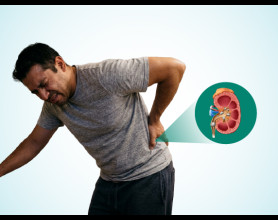
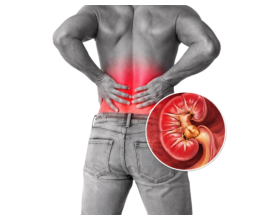
One of the most severe symptoms of kidney stones is renal colic, a sharp, stabbing pain that often begins suddenly.
The pain occurs when a stone moves from the kidney into the ureter (the tube connecting kidney to bladder). The ureter contracts forcefully to push the stone down, causing intense spasms.
A burning sensation during urination may occur if:
This symptom is often mistaken for a urinary tract infection (UTI). However, kidney stones and UTIs can sometimes occur together, making proper diagnosis essential.
Besides back pain and burning urination, watch for:
1. Blood in Urine (Hematuria)
Stones can scratch the lining of the urinary tract, causing pink, red, or brown urine.
2. Frequent Urge to Urinate
Especially if the stone is lodged near the bladder.
3. Nausea and Vomiting
Severe pain can trigger gastrointestinal responses.
4. Cloudy or Foul-Smelling Urine
This may indicate infection.
5. Fever and Chills
This is a medical emergency and may indicate infected kidney stones.
Understanding stone type helps prevent recurrence.
1. Calcium Stones (Most Common)
2. Uric Acid Stones
3. Struvite Stones
4. Cystine Stones
At MASSH Hospital, laboratory analysis of passed stones helps determine long-term prevention strategies.
Kidney stones form when urine becomes concentrated, allowing crystals to stick together.
Kidney stones form when certain substances in urine — like calcium, oxalate, and uric acid — become highly concentrated, allowing crystals to form. These crystals can grow into stones over time.
1. Dehydration
Not drinking enough water is the leading cause.
2. Diet
3. Obesity
Higher body weight increases stone risk.
4. Family History
Genetics play a role.
5. Certain Medical Conditions
6. Medications
Some supplements and drugs may increase risk.
Fact: People who drink less than recommended daily water are at significantly higher risk.
At MASSH Hospital, accurate diagnosis is the first step toward effective treatment.
Diagnostic Tools Include:
1. Ultrasound
Non-invasive and commonly used.
2. CT Scan
Gold standard for identifying stone size and location.
3. X-ray (KUB)
Useful for certain stone types.
4. Urine Tests
Detect infection and crystal composition.
5. Blood Tests
Check kidney function and mineral levels.
Treatment depends on stone size, location, symptoms, and patient health.
For stones smaller than 5 mm:
Many small stones pass naturally within a few weeks.
When stones are larger or stuck, intervention is required.
a.) RIRS (Retrograde Intrarenal Surgery) :
RIRS is a minimally invasive procedure where a flexible scope is passed through the urinary tract to reach the kidney. A laser is then used to break the stone.
Ideal For:
Benefits:
b.) URS (Ureteroscopy) :
Ureteroscopy is used primarily for stones located in the ureter (the tube between kidney and bladder).
A thin scope is inserted through the urethra into the ureter to remove or fragment the stone using laser energy.
Benefits:
c.) PCNL (Percutaneous Nephrolithotomy) :
PCNL is recommended for larger kidney stones.
In this procedure:
Suitable For:
PCNL offers high stone clearance rates for large stones.
d.) ECIRS (Endoscopic Combined Intrarenal Surgery) :
ECIRS is an advanced technique combining both retrograde (through urinary tract) and percutaneous (through small back incision) approaches.
Advantages:
This approach enhances precision and effectiveness in difficult cases.
e.) Laser Lithotripsy :
A modern technique where a laser breaks stones into tiny fragments.
Advantages:
At MASSH Hospital, the focus is on minimally invasive, patient-friendly techniques to ensure quicker recovery. Explore complete details about these procedures here: Kidney Stone Specialists at MASSH.
Untreated kidney stones can lead to:
Early consultation prevents these complications.
Dr. Poonam Gulati specializes in minimally invasive kidney stone management including Laser Lithotripsy, RIRS, PCNL, URS, and ECIRS. With extensive experience in treating complex kidney stone cases, he focuses on personalized treatment planning and long-term recurrence prevention.
Consult Dr. Poonam Gulati: Doctor Profile Page
MASSH Super Speciality Hospital is a leading multi-speciality healthcare center in Delhi offering advanced urology services with state-of-the-art infrastructure, experienced specialists, and patient-centered care.
Visit Official Website: https://MASSH.in/
Last Updated: February 2026
Content Category: Urology / Kidney Stone Treatment
Reviewed By: Dr. Poonam Gulati
Hospital: MASSH Super Speciality Hospital, Delhi
Know the early symptoms of kidney stones, including severe pain, blood in urine, and nausea. Read about diagnosis, treatment, and prevention tips...
Written by MASSH
Jul 11, 2026
Get expert kidney stone treatment in South Delhi. Explore advanced, minimally invasive surgeries at MASSH Super Speciality Hospital for quick rec...
Written by MASSH
Apr 01, 2026
Laser treatment for kidney stones in Noida: know cost, benefits, procedure, and recovery. Safe, minimally invasive care by expert urologists.
Written by MASSH
Mar 25, 2026



 Quick Enquiry
  Call(24*7)
  Whatsapp