Surgery is scary, regardless of whether you’re undergoing open surgery or laparoscopic surgery. The fear of surgery is called tomophobia, and almost 60 to 80% of patients who undergo surgeries have it to some extent at least. Laparoscopic surgery is safer comparatively this is common knowledge. But many patients don’t know why it is safer.
The simple answer is that this type of surgery makes smaller incisions in your body. For this reason, laparoscopic surgery is safer. But there are many more reasons that contribute to its safety. There are also many unknown benefits and recovery timeline improvement possibilities associated with laparoscopic surgery. Let’s discuss all of them in this detailed blog about why laparoscopic surgery is safer.
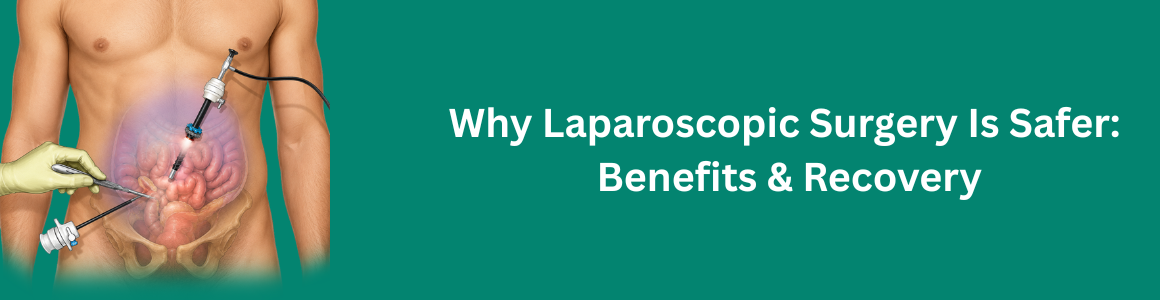
Laparoscopic surgery is also known as minimally invasive surgery. It is a modern surgical technique where electronic tools are used to make surgery safer for patients. The primary difference, as the name suggests, is that laparoscopic surgery requires smaller incisions into the patient's body. Smaller incisions mean less tissue trauma. This directly relates to recovery time and how quickly the patient is discharged from the hospital.
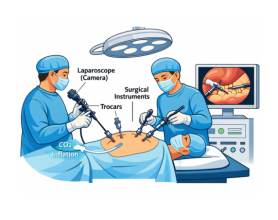
Traditional open surgery generally requires one large incision to operate on patients. There is no need for electronic devices since the doctors can navigate the patient’s insides directly. Laparoscopic surgery involves making small incisions into the body no bigger than a few centimeters. These incisions are used to insert a laparoscope inside the body.
The laparoscope is a thin instrument with a high-definition camera and a light source attached to its head. This allows surgeons to visualise the surgery site. The surgical tools are then inserted into the surgical site using other incisions. Using the visual guidance of the laparoscope, surgeons perform all types of surgeries using the laparoscopic method.
Laparoscopic surgery is considered safer because it causes less tissue trauma and supports quicker recovery. The minimally invasive procedure puts your body under less physical stress. This is especially important for patients who do not have optimal health. For them, a laparoscopic procedure is the only way to undergo surgery. What are the other reasons laparoscopic surgery is considered safer? Let’s find out.
As mentioned previously, when your body has smaller incisions, it causes less trauma to your tissues. This equally relates to quicker recovery times, as you don’t have to recover from one large cut in your body. Smaller openings also cause less damage to the skin, leading to a lower chance of scar tissue formation. This helps you prevent the formation of surgical mark scars. Some of the key benefits of a smaller incision are:
Smaller incisions also don’t require stronger habit-forming pain medications. This is also a major benefit of laparoscopic surgery.
If you have smaller incisions, the area that can be infected post-surgery also becomes smaller. This leads to quicker recovery and helps patients get back to their lifestyle faster. Another important factor to mention here is that laparoscopic surgery requires less hospital stay. The lower hospital stay helps patients reduce the risk of hospital-acquired infections. Post-operative care and hygiene are, however, still more important after surgery, ultimately to reduce the risk of infections further.
Blood loss during surgery leads to increased recovery time. Minimally invasive surgeries have lower blood loss during surgery since very small incisions are made. Laparoscopic surgeries allow for enhanced precision during surgery because of the use of high-definition camera magnification. Since the internal view of surgeons is created without major incisions, it has several benefits, including a reduced need for blood transfusion during or after surgery. This benefit is especially helpful for older patients with existing comorbidities.
Recovery is faster for patients following a laparoscopic surgery because the healing is faster due to the smaller incision. Faster recovery directly helps patients get back to their lifestyle soon after the surgery and also helps with shorter hospital stays, faster mobility after surgery, and reduced physical discomfort during healing.
Laparoscopic surgery is associated with fewer post-operative complications in many cases. The lower risk of complications stems from the fact that there’s less stress from the surgery in the case of minimally invasive procedures. The lower stress and trauma help with a lower risk of complications. Also, these surgeries are performed with incredible precision at the MASSH Super Specialty Hospital to ensure safe recovery for patients.
There are numerous benefits of a laparoscopic surgery. This is specifically compared to open surgery. These benefits are the reason why laparoscopic surgery is the preferred mode of surgery today. Here are the key benefits of laparoscopic surgery.
| Factor | Laparoscopic Surgery | Open Surgery |
| Incision size | Small incisions no larger than 1.5 cm. | Incision size can range several inches in length |
| Pain level | Usually lower | Higher |
| Recovery time | Fast | Slow |
| Hospital stay | Short | Long |
| Infection risk | Low, due to a smaller incision size | Higher due to the large incision size |
| Scarring | Low-risk of scarring | Higher risk of scarring and adhesions |
| Blood loss | Less | More |
| Return to daily life | Fast within a week | Slow takes several weeks |
Recovery after laparoscopic surgery is generally fast and smooth. This is especially compared to the recovery experience of a traditional open surgery. Since minimally invasive surgeries have smaller incisions, recovery is easier. However, it is important to note that post-surgical care and personal hygiene are still very important for a smooth recovery process. For the best post-surgical care, choose the right healthcare organisation like the MASSH Super Specialty Hospital in South Delhi.
When you’re out of the operating theatre, you will be transported to your bed or to a monitoring room in the hospital. At this time, you’re expected to be under the effects of anaesthesia. Once the effects of anaesthesia wear off, this is what you can expect:
If it reads too much like an anaesthesia history, that is because anaesthesia has prolonged effects on your body. However, once the effects of anaesthesia wear off, you are generally free to get a discharge from the hospital. This is how quick and easy the surgery experience is with laparoscopic surgery.
The recovery timeline is an important factor when considering surgery. In most cases, patients of laparoscopic surgery fully recovered in a matter of weeks. The primary recovery happens in the first ten days of the surgery. Once the primary recovery is complete, patients can go back to work. The secondary recovery, which is complete full and final recovery, happens within 4 to 6 weeks of the surgery. Here’s a table of the recovery timeline for patients.
| Recovery Timeline | Recovery Highlight |
| First 24 to 48 hours | Patients can walk by themselves, and they are asked to walk slowly. Light activities should be resumed slowly over time. Lastly, it is expected to experience some soreness and fatigue over the course of two days. |
| After 1 week | In this period, the swelling and pain go down significantly. People can slowly return to sedentary physical activity and work. Physical activity is also recommended based on medical advice. Patients are free to return to routine daily activities. |
| Within 2 to 4 weeks | This is the stage where most patients recover fully from minor laparoscopic surgeries. Patients also get back to their normal energy levels by now, with no need for pain medication any further. Lastly, the physical activity and clearance for strenuous physical jobs are also given during this period. |
Laparoscopic surgery recovery is already fast. To improve your recovery speed further, make sure you take the following steps:
At MASSH Super Specialty Hospital in South Delhi, patients are offered a detailed dietary chart of what they should eat following a surgery. The dietary chart is personalised based on the specific nutritional requirements of the patient, as well as keeping in mind their dietary choices. To help you get an idea of what the dietary chart may look like, here’s a detailed overview of the foods to eat during recovery.
The success and safety of laparoscopic surgery are highly dependent on the surgeon's skill and the surgical infrastructure of the medical institution of your choice. At the MASSH Super Specialty Hospital, we have both. We proudly collaborate with the top medical professionals in every department. Our surgical team is experienced and highly trained. The surgical infrastructure of MASSH is also world-class, which makes us the best destination in South Delhi for your minimally invasive surgical needs. You can trust us with laparoscopy, because minimally invasive surgery is in our name, Minimal Access Smart Surgery Hospital (MASSH).
MASSH Super Speciality Hospital Laparoscopy & General Surgery Team
Our highly experienced laparoscopic general surgeons have expertise in advanced treatment options for all types of hernia, including laparoscopic hernia surgery. Treatments are often accompanied by lifestyle and metabolic guidelines for long-term sustainable health.
Yes, laparoscopic surgery is safe, and specifically safer than traditional open surgery. However, you must know that every surgery, including laparoscopic surgery, has risks because surgery, by nature, involves risks. The common risks of laparoscopic surgery include infection of the surgical site and damage to surrounding structures, causing internal bleeding.
The primary recovery after a laparoscopic surgery takes around 7 to 10 days. During this time, most patients are able to get back to work if they have sedentary work. The secondary recovery takes two to four weeks, during which time patients are able to completely return to daily activity and their lifestyle, including physically strenuous activity.
No, laparoscopic surgery is not painful. This is because laparoscopic surgery is performed under general anaesthesia. This ensures patients feel no pain during the surgery. After the surgery, when the effects of anaesthesia wear off, patients get pain medication to help manage the discomfort and pain that remains.
No, all surgeries cannot be done laparoscopically because sometimes the surgery requires a traditional open approach. The primary example is a C-section delivery surgery. This is one of the most common surgeries in the world today, and it cannot be performed as a minimally invasive surgery.
The advantages of laparoscopic surgery are that it has smaller incisions in the patient’s body. The smaller incisions help with faster recovery, lower risk of complications and adhesions, as well as a better chance of not forming scars on the surgery sites.
You can return to sedentary work within seven days of your laparoscopic surgery. For more physically strenuous or outdoor jobs, your recovery may take 10 to 14 days before you can get back to work. The most important part here is following the full rest and recovery requirements before you move on.
This blog is intended for educational and informational purposes only. It should not be considered a substitute for professional medical advice, diagnosis, or treatment. Always consult a qualified general surgeon in Delhi for proper evaluation and treatment recommendations.
Learn about appendix pain location, common symptoms, warning signs, and when to see a doctor. Get timely medical advice to prevent serious compli...
Written by MASSH
Jul 15, 2026
A step-by-step guide to what patients can expect on the day of laparoscopic surgery at MASSH, Delhi, ensuring safety, comfort, and faster recover...
Written by MASSH
Jan 14, 2026
Experience advanced minimal access surgery at MASSH, South Delhi, with expert doctors, modern technology, and quicker healing.
Written by MASSH
Jan 12, 2026




 Quick Enquiry
  Call(24*7)