Written by MASSH
Mar 24, 2026
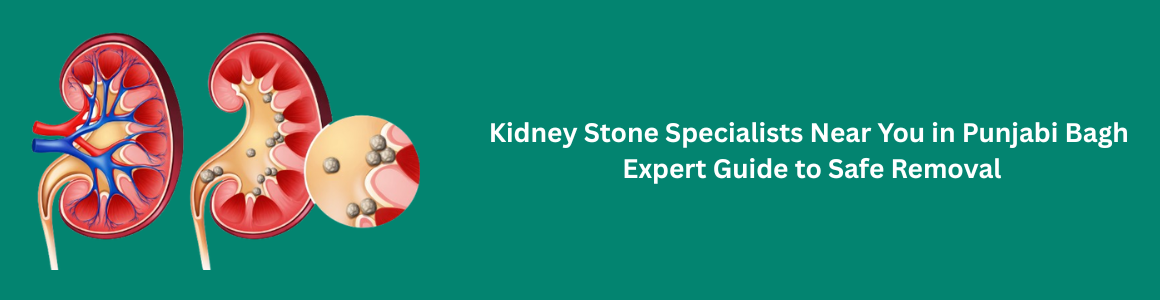
Kidney stones are a painful condition that’s quite common in Northern India. The region of Punjabi Bagh, which is part of Delhi NCR, experiences many cases of kidney stones. The cause is often linked to the effects of modern lifestyle and poor dietary habits. Chronic dehydration, stress, and malnutrition all play an important role in the increased risk of kidney stones in the region. If you’re already suffering from kidney stones or you’re experiencing symptoms, what should you do? The first step is to get in touch with a kidney stone specialist in Punjabi Bagh.
Who are kidney stone specialists? Kidney stone specialists help patients relieve pain and get the required treatment for their condition. These specialists are highly trained in understanding and preventing nephrological complications associated with kidney stones. They also offer personalised treatment with the goal of minimising the agonising pain associated with kidney stones. However, where do you find kidney stone specialists in Punjabi Bagh? And how do you know which kidney stone specialist to visit? Let’s answer all these questions while understanding kidney stones as a whole in this blog.
Kidney stones require medical treatment in most cases. If your kidney stones are beyond 4 to 6 mm in size, it requires medical treatment that ranges from medicinal treatment to surgery. It is important to note that kidney stone treatment in Punjabi Bagh is often led by surgical treatments because of their safety and ability to remove all kidney stones from your body at once. In cases where patients do not get surgical treatment, it leads to significant pain that patients experience when kidney stones pass one by one out of their system.
Kidney stone treatment, specifically medicinal treatment in Punjabi Bagh, is a two-sided effort. It involves the use of medication that dilates the ureters and NSAIDs to help manage the pain from stone passing. Apart from this, excellent hydration practices and adequate dietary and lifestyle restrictions are also required for safe treatment. Kidney stones have a tendency to recur in patients who get it once. So, the lifestyle changes recommended often become a permanent part of a patient's life that they must follow.
Kidney stones are formations inside the kidneys that form when there’s excess calcium, oxalate, or uric acid in your urine. The excess minerals come from dietary or lifestyle factors. However, underlying medical conditions can also cause these minerals to be present in your urine. Kidney stones take time to form, and they are asymptomatic until they become big enough to block the functioning of your kidneys. In some cases, the kidney stones can also get lodged in your ureters and block the flow of urine. In both cases, pain is the first symptom experienced in the case of kidney stones.
Kidney stones form due to sedimentation. The process that leads to the formation of sedimentary rocks in the crust of the Earth is also the same process that leads to the formation of kidney stones. As surprising as that may sound, it is true. Kidney stones form when layers of mineral sediments layer over one another and slowly crystallise. Do all mineral sediments turn into kidney stones, no? Certain minerals, specifically in combination, become more prone to crystalisation, and those minerals, specifically calcium, oxalate, and uric acid, form kidney stones in patients. These minerals bind with each other to form stones in patients who suffer from chronic dehydration and have excess amounts of said minerals in their bodies.
The risk factors of kidney stones include:
The signs and symptoms of kidney stones are one of the most important factors patients should monitor if they suspect kidney stones. The early signs of the condition can help you decide when to visit a kidney stone specialist near you in Punjabi Bagh. Here are the signs and symptoms you should look out for.
A kidney stone specialist in Punjabi Bagh will be able to help you best if you visit them as early as possible. This is why it is important not to ignore your symptoms and seek medical help when you’re experiencing multiple symptoms. Here is a direct guideline you can use to determine when you should visit a kidney stone specialist in Punjabi Bagh.
Kidney stone diagnosis is performed using three methods: blood tests, urinalysis, and imaging tests. If you’re visiting a kidney stone specialist in Punjabi Bagh, this is how the diagnosis experience can go for you.
When you first report the symptoms, the kidney stone specialists will follow this stepwise diagnosis process:
Kidney stone treatment options are highly dependent on the stone size. This guide helps you understand your treatment options better and also helps you prevent undergoing surgeries if you don’t need to. The following table highlights a breakdown of kidney stone size and its treatment options.
| Stone Size | Treatment Options |
| <4 mm | Stones can naturally pass with proper hydration |
| <6 mm and >4 mm | Stones this size require medicinal treatment and active monitoring. |
| <10 mm and >6 mm | Requires medical treatment, specifically surgical treatment such as ureteroscopy. |
| >10 mm | Stones this size require advanced surgical treatment such as RIRS and PCNL. |
A kidney stone specialist in Punjabi Bagh can help you assess your treatment options and put you on a personalised treatment plan that treats your symptoms and removes the stones from your body with the least discomfort. Unlike other conditions, kidney stones require emergency medical treatment because of the pain associated with them. This is why the treatment plan must be developed quickly, and it should also be mindful of your overall health. Kidney stone specialists in Punjabi Bagh at the MGS MASSH Super Speciality Hospital can help you get the right treatment, keeping all these constraints in mind.
A kidney stone specialist is a medical professional who has experience and knowledge in treating kidney stones. Generally, these professionals are nephrologists or urologists. Both these medical professionals can understand and help patients with kidney stones. If you don’t have a nephrologist near you in Punjabi Bagh, feel free to visit a urologist. The specialisation doesn’t matter as long as you’re referring to either a nephrologist or a urologist with your symptoms.
There are three types of treatments offered for kidney stones. The treatments are: lifestyle changes, medicinal treatment, and surgery. The treatment options are directly correlated to the kidney stone size as described previously. So, how exactly does each of these treatment options work? Here’s a detailed overview.
If your kidney stones are less than 4 mm in size, doctors generally recommend lifestyle and dietary changes as a treatment. What are these lifestyle and dietary changes? Here’s a list:
Medications are used to dissolve kidney stones. They work only for smaller stones; however, for patients who can get an early diagnosis, this type of treatment can be very helpful. The medications offered by kidney stone specialists in Punjabi Bagh include:
Surgery is the best and quickest treatment option for kidney stones. It offers quick relief and ensures all kidney stones are removed from your body. Even though surgery recommendation is dependent on the patient’s overall health, there are numerous kidney stone surgery options today that are very quick, safe, and non-incisive. This allows many patients who would not be recommended for open surgery to be eligible for these advanced kidney stone removal surgeries. Here’s a detailed breakdown of the best kidney stone removal surgeries recommended at the MGS MASSH Super Speciality Hospital.
The MGS MASSH Super Speciality Hospital specialises in personalised, participatory, predictive, precise, and preventive medical care. The 150-bed MGS MASSH Super Speciality Hospital offers holistic medical care to patients across departments, including: Advanced Urology, Laparoscopy & GI Surgery, Laparoscopic Gynaecology, Orthopaedics, Spine & Sports Injury, Internal Medicine & Critical Care, Bariatric & Metabolic Surgery, Medical & Surgical Oncology, Cardiology, Nephrology & Dialysis, Neurosciences, and Pulmonology. If you’re still on the fence, here are four more reasons you should choose the MGS MASSH Super Specialty Hospital.
1. Is a kidney stone a serious medical condition?
Yes, kidney stones are often considered a serious medical condition due to a number of factors. First, they can hamper the functioning of your kidneys, which are a vital organ for your survival. Additionally, kidney stones can recur, which can put your health at constant risk if not treated properly in due time.
2. Can kidney stones be fatal?
No, kidney stones by themselves cannot be fatal. However, untreated kidney stones can cause kidney failure over time, which can be a fatal medical complication. Additionally, untreated kidney stones can cause urinary tract infections in your body, which can weaken your immune system, making you more susceptible to other infectious diseases, which can result in a combined fatal medical complication.
3. What is the primary cause of kidney stones?
The primary cause of kidney stones is often a high-sodium diet along with chronic dehydration. People who drink alcohol regularly are also at a higher risk of kidney stones because of its dehydrating effects.
4. How to prevent kidney stones?
You can prevent kidney stones by simply drinking more than 2 litres of water per day. Along with that, be mindful of your diet and prevent obesity to keep your risk of kidney stones in check.
5. Are kidney stones manageable without treatment?
Yes, very small kidney stones can be managed without medical treatment by just following the best kidney stone preventive measures. However, if you’re experiencing pain from kidney stones, it is advisable to seek medical help only.
6. What are the common kidney stone sizes?
The size of kidney stones can range from less than 4 mm to over 10 mm. The treatment options recommended to patients depend a lot on the size of the kidney stones they have. Smaller stones can be treated with just lifestyle and dietary changes, while larger stones require surgical treatment.
7. Do I need surgery for large kidney stones?
Yes, surgical treatment is the best and safest treatment option for large kidney stones. There are many non-incisive kidney stone removal surgery options available today at the MGS MASSH Super Speciality Hospital. Connect with us today to learn more about your treatment options.
8. Are kidney stone removal surgeries safe?
Yes, kidney stone removal surgeries are safe and allow for quick recovery for patients. They are also minimally invasive surgeries, which have very little risk to your overall health.
9. What is the recovery time for kidney stone removal surgeries?
The recovery time for kidney stone removal surgeries depends a lot on your overall health and the surgery you underwent. However, the general recovery timeline for a kidney stone removal surgery is less than a week. Almost all patients are able to rejoin work within a week of the surgery.
10. When can I visit a kidney stone specialist in Punjabi Bagh?
You should visit a kidney stone specialist in Punjabi Bagh at the MGS MASSH Super Speciality Hospital when you have more than one symptom. This means if you’re experiencing flank pain that’s intensifying along with pain while urinating or nausea, it is the best time to visit a kidney stone specialist. They will help you determine whether kidney stones are the cause of your symptoms or not and create a personalised treatment plan, if required.
MGS - MASSH Urology Team
Our highly experienced urology team has expertise in advanced endourology and minimally invasive kidney stone surgeries. The team’s clinical focus includes the management of complex kidney stones using techniques such as RIRS, ECIRS, and PCNL, along with preventive kidney stone care through lifestyle and metabolic evaluation.
This blog is intended for educational and informational purposes only. It should not be considered a substitute for professional medical advice, diagnosis, or treatment. Always consult a qualified kidney stone specialist or urologist for proper evaluation and treatment recommendations.
Know the early symptoms of kidney stones, including severe pain, blood in urine, and nausea. Read about diagnosis, treatment, and prevention tips...
Written by MASSH
Jul 11, 2026
Get expert kidney stone treatment in South Delhi. Explore advanced, minimally invasive surgeries at MASSH Super Speciality Hospital for quick rec...
Written by MASSH
Apr 01, 2026
Laser treatment for kidney stones in Noida: know cost, benefits, procedure, and recovery. Safe, minimally invasive care by expert urologists.
Written by MASSH
Mar 25, 2026



 Quick Enquiry
  Call(24*7)
  Whatsapp