Gallbladder stones are a common health problem among Indians. Up to 6% of adults in India get gallbladder stones at some point in their lives. Surgery is among the only long-term treatment options for this condition. While surgery is a matter of fear among patients, it doesn’t have to be when you choose the right medical institution for your treatment in Delhi, like MASSH.
As one of the premier minimally invasive surgical institutions in North India, MASSH can help you get a completely safe and quick 3D laparoscopic surgery in Delhi. Thanks to the world class surgical infrastructure of MASSH combined with the experienced surgeons and doctors on board, MASSH is the best destination for 3D laparoscopic surgery in Delhi.
But how is the surgery performed? What are its risks? And what is the recovery period of 3D laparoscopic surgery? Let’s take a deep dive into gallbladder removal surgeries, with a brief introduction on what the gallbladder and gallstones are.
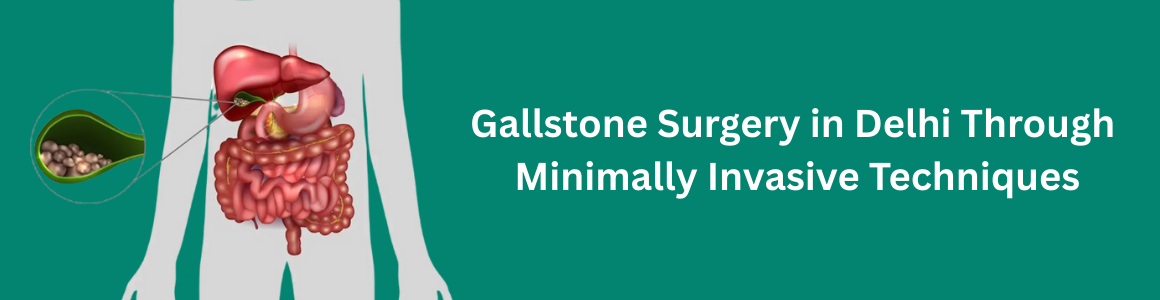
The gallbladder is a small organ located near the liver. It stores bile, an important digestive enzyme produced by the liver. The gallbladder works by extracting water out of bile to make the enzyme more concentrated. When you consume fatty food, the gallbladder squeezes the bile concentrate it is storing into the small intestines.
Gallstones form when cholesterol, bile residue, and calcium salts in the gallbladder form small stones. The risk of gallstones increases when the gallbladder can’t empty completely, and the cholesterol in bile crystallises. While gallstones are not harmful to your health, blockage of the crucial ducts by gallstones can lead to health problems like pancreatitis. In fact, untreated gallstones can also cause gallbladder disease. In such cases, the best treatment option is to go for a cholecystectomy, which involves the laparoscopic (in most cases) removal of the gallbladder.
3D laparoscopic surgery is often referred to as a keyhole surgery since it is performed as a minimally invasive procedure in most cases. It is one of the most common and safest surgeries performed globally, with one of the highest success rates. As a minimally invasive surgery, it has a relatively low recovery period and minimal surgical risks.
In fact, surgery is recommended for gallstones because living with gallstones has more health risks than going through the surgery. 3D laparoscopic surgery can be performed on patients who clear the following prerequisites:
These prerequisites are crucial for clearance because gallstones and the need for 3D laparoscopic surgery are higher in patients above the age of 50. As a result, comorbidities, previous scars, and the ability to tolerate anaesthesia must be judged before the surgery for a safe procedure.
The 3D laparoscopic surgery is the better and more advanced surgical method for the surgical removal of the gallbladder. In case of gallstones, 3D laparoscopic surgery allows better visualisation of the internal organs and surrounding structures at the time of surgery. This ensures that surgeons can perform a highly precise surgery when using 3D laparoscopic imagery.
The 3D laparoscopic surgery is especially helpful for complex gallstone cases, since general laparoscopic surgery is conventionally limited when it comes to the treatment of complex or extensive gallstones. Cholecystectomy surgery in comparison leads to a longer hospital stay and a longer recovery period. And even though 3D laparoscopic surgery is more advanced, it is not considerably more expensive in terms of surgical costs compared to cholecystectomy surgery.
3D laparoscopic surgery is recommended due to gallstones and other medical conditions associated with the gallbladder. Here are some of the most common reasons a cholecystectomy is recommended.
These are the most common reasons why a gallbladder removal surgery is recommended to patients. Be aware that a 3D laparoscopic surgery is a complete treatment for most of the conditions listed above. The removal of the gallbladder permanently eliminates the risk of gallstones, polyps, and gallbladder cancer.
There are two types of cholecystectomy surgery in general: laparoscopic and open surgery. Both surgeries are safe and can be used for permanent treatment of gallbladder-related health problems. However, the laparoscopic cholecystectomy allows quicker recovery and has lower risks compared to open surgery. Here is a detailed overview of both surgery types.
Preparing for cholecystectomy surgery involves some steps that you must go through with your healthcare team. When you’re recommended for a 3D laparoscopic surgery, here is everything that’s done and you need to do to prepare for the surgery.
The surgical procedure of gallbladder removal surgery is similar for both the laparoscopic and open surgeries. However, the difference lies in the beginning, where for laparoscopic surgeries, small incisions are made into the surgical site to access internal organs, and for open surgeries, one large incision is made to directly access the internal organs. Here is a detailed overview of how a gallbladder removal surgery is performed.
The surgery starts when you are brought into the operating theatre and put under anaesthesia. Based on your preference and surgeon recommendation, you will be put under local or general anaesthesia. Once you’re sedated, doctors start the surgery by creating incisions into your abdomen, which is the surgery site for a cholecystectomy. For a minimally invasive surgery, doctors create up to four incisions that are only 1 or 2 cm in size. For an open surgery, doctors create one large incision measuring four to six inches in the abdomen.
For a laparoscopic surgery, the first step is to inflate the stomach by inserting gas into it. This makes it easier for surgeons to visualise your internal organs. After the gas is inserted, surgeons insert the laparoscope, which is a surgical instrument that involves a large tube with a camera attached at the top of it. The laparoscope allows surgeons to see inside your body while performing the surgery.
MASSH, as one of the premier minimally invasive surgical institutes in India, offers 3D laparoscopic cholecystectomy that allows three-dimensional visualisation inside the patient's body while performing surgeries. This improves surgical outcomes and ensures even higher surgical precision. With the laparoscope in place, doctors insert the surgical tools inside the body, which are used to cut out and remove the gallbladder from the body. Once the gallbladder is removed, doctors safely stitch the incisions.
For an open surgery, once the incision is made, doctors access the internal organs directly and remove the gallbladder. Once the gallbladder is removed, surgeons stitch up the incision to complete the surgery. After the incisions are stitched up, patients are brought back from anaesthesia and sent for recovery. Surgeons perform rounds after the patients are awake and responding after the surgery. This is done to ensure patients are not suffering from any complications caused by the anaesthesia. With recovery underway, patients are all set to rest and get discharged the following day, if their recovery is progressing accordingly.
Recovery after gallbladder removal surgery depends on whether you underwent an open or laparoscopic cholecystectomy. Here’s a detailed overview of the recovery process.
You can survive without a gallbladder without any major health risks. However, you may experience certain changes and effects of gallbladder removal after your cholecystectomy. For the most part, a gallbladder removal does not warrant major lifetime changes that you must undertake. Most changes that you experience are short-term, and your medical team helps you go through these changes smoothly. Here is a brief overview of the changes you may experience after a gallbladder removal.
3D laparoscopic surgery is among the safest surgeries, and it doesn’t have many associated risks and complications. Yes, for any surgery, wound infection is an important surgical risk; it applies to cholecystectomies, too. Here are the other risks and complications commonly associated with cholecystectomies.
1. Bile leakage: If the surgery is not performed perfectly, it can lead to bile leakage inside the body.
2. Bleeding: Similar to bile leakage, improper surgery can lead to internal bleeding if any surrounding structures are damaged. If internal bleeding is not addressed or identified in a timely manner, it can lead to further complications.
3. Anaesthesia Risks: Patients undergoing anaesthesia carry certain risks, which are passed onto cholecystectomy, since this surgery also requires patients to go under anaesthesia.
4. Damage to Surrounding Structures: The gallbladder is located in your upper digestive tract and is closely located with other organs like the liver, stomach, pancreas, and spleen, among others. Surgery by inexperienced surgeons or surgery under improper conditions can lead to damage to these surrounding structures, which can potentially cause complications both during and after the surgery.
The cost of cholecystectomy surgery in Delhi depends on the type of surgery you require. Even though it is generally considered that open surgery is more affordable compared to laparoscopic surgery, this is not true anymore, thanks to the efforts of leading healthcare institutions like MASSH. Both laparoscopic and open cholecystectomies are affordable at MASSH, with complete pre- and post-surgical care offered by our dedicated surgical and medical team. For more information about surgery costs, please feel free to consult with our surgical team at any of our MASSH hospitals located across North India.
MASSH is the best hospital for your cholecystectomy in Delhi for several reasons. First, MASSH is led by experienced surgeons like Dr Sachin Ambekar, with over 24 years of experience. Second, the hospital boasts world-class infrastructure that allows safe surgeries with optimal surgical outcomes. Lastly, MASSH is one of the leading hospitals in India that offers specialised minimally invasive surgeries that are safe for patients while also being affordable. For more information about cholecystectomy in Delhi at MASSH, feel free to set up a consultation with our surgeons at the MASSH Super Speciality Hospital in South Delhi.
1. How long does recovery take after cholecystectomy?
Patients who undergo laparoscopic cholecystectomy can get back home within 24 hours in some cases. Light activities that put less strain on the patient’s body can be resumed within a few days, and full recovery takes around 1 to 2 weeks. For open surgery, the recovery time is around six to eight weeks for full recovery.
2. Is gallstone surgery painful?
Gallstone surgery is generally performed under general anesthesia. Therefore, patients do not feel any pain during the procedure. Post-surgery discomfort around the incision site and shoulder area is normal, but it is well-controlled with pain medication, which improves within a few days.
3. Can I live normally without a gallbladder?
Yes, most people digest food normally after gallstone surgery, as the gallbladder is not an essential organ. Some people may notice changes in digestion, especially in terms of fatty food; however, things get back to normal as the body usually adapts over time.
4. Is laparoscopic gallbladder surgery safe?
Laparoscopic cholecystectomy is considered a safe procedure with a high success rate. It involves smaller cuts, less pain, quicker recovery, and fewer complications compared to open surgery.
5. What happens if gallstones are not treated?
When gallstones are untreated, they can lead to infection, gallbladder inflammation, repeated pain episodes, bile duct blockage, or pancreatitis. Timely treatment and surgery can prevent these complications and avoid an emergency situation.
It is important to know the differences in symptoms. Otherwise, it could lead to delayed diagnosis and a higher risk of complications arising fro...
Written by MASSH
Jul 23, 2026
Read about gall stone causes, symptoms, and treatment options in Noida including minimally invasive surgery for effective and safe removal.
Written by MASSH
Mar 26, 2026
Get trusted gallstone specialists in Ludhiana. Learn about symptoms, causes, and minimally invasive treatment options for safe and effective gall...
Written by MASSH
Mar 16, 2026




 Quick Enquiry
  Call(24*7)