Gallbladder stones are more common in women than in men. Statistically, gallstones are two to three times more common in women than in men. This is because of a number of anatomical reasons and the endocrinological system of the women’s body that causes this increased risk. Apart from being more prone to the condition, women also experience some symptoms of gallstones differently.
It is important to understand the differences in symptoms, which could otherwise lead to delayed diagnosis and a higher risk of complications arising from gallstones. Gallbladder stone symptoms in women must be understood to prevent the condition in its early stages. This is why we’ve listed the most important gallbladder stone symptoms in women and how they can be commonly misunderstood as other general health concerns.
| Question | Quick Answer |
| What are gallstones? | Hardened bile deposits form inside the gallbladder. These deposits form over a long time and are caused by a number of underlying health problems. |
| Who is most at risk? | Women over the age of 40 are at the highest risk of gallstones. Apart from that, pregnant women, overweight individuals, and those with hormonal risk factors. |
| Most common symptom? | Pain in the upper right quadrant of your abdomen, especially after eating meals with fat-rich food. |
| Can women have symptoms without severe pain? | Yes, other symptoms like nausea, bloating, and indigestion can occur first. It is important to note these symptoms and inform them to your doctor if they persist. |
| When should you see a doctor? | If you are experiencing persistent pain with fever and vomiting, you should visit the doctor. Other symptoms like yellowing of the skin and other jaundice-like symptoms, also require immediate medical evaluation. |
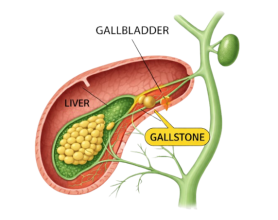
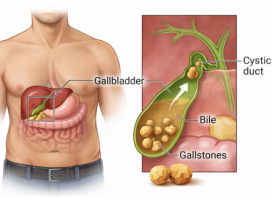
Gallstones are hardened bile deposits that form inside the gallbladder. To understand gallstones, you need to understand the function of the gallbladder itself. The organ is located in the upper right quadrant of your abdomen, and its function is to store and concentrate bile. When you consume a fat-rich meal, bile is required to break down the fat in the food. That’s when the gallbladder secretes its stored bile to help break down the food and help in the digestion process.
So, how do gallstones form? Gallstones form specifically when the chemical balance of your bile changes. This can happen due to a number of reasons, but most commonly, what happens is that substances like cholesterol or bilirubin get mixed with bile. These substances crystallize and gradually form stones. So, excess cholesterol or bilirubin in your body can increase your risk of gallstones. This also helps you understand that there are different types of gallstones and the type of gallstone is determined by its chemical makeup.
There are mainly two types of gallstones. Here’s a brief overview of both:
Gallstones do not always cause symptoms; in fact, it is not unusual for some patients to never get symptoms, even with gallstones. So, when do symptoms start and why do they happen? The symptoms happen because when a stone moves through the biliary tract, it can block the cystic duct or the common bile duct. This prevents bile from flowing normally through the body. The blockages create pressure against the blockage, leading to pain and other digestive symptoms.
The symptoms should be treated seriously because a blocked bile duct can cause inflammation of the gallbladder. In such cases, you can get acute cholecystitis. This condition increases your risk of complications, such as bile duct infection, jaundice, or pancreatitis. All of these conditions can have a serious impact on your health and can even prove to be fatal. This is why it is important to identify these symptoms at an early stage and prevent these complications in the first place.
Gallbladder stone symptoms in women can be a little different from those in men. The symptoms can range from simple gastrointestinal discomfort to severe pain in the upper right quadrant of the abdomen. The symptoms are mainly caused when the gallstones start moving, as mentioned previously. It is possible to stay symptom-free for years; however, some may experience symptoms suddenly when the gallstones start blocking the flow of bile. Here’s a detailed look at the symptoms of gallstones experienced by women. It’ll help you identify and note the symptoms at an early stage and get a timely diagnosis.
| Symptoms | What it Feels Like | Why it Happens |
| Pain in the upper right quadrant of your abdomen | Sharp pain that starts as cramping or can also start as a steady pain just below the right rib cage | Gallstones block the flow of bile. This increases the pressure in the gallbladder and causes the pain |
| Pain after fatty meals | Sharp pain that starts immediately or within a few hours of eating fried or high-fat foods | The gallbladder contracts when it has to release bile to break down fats from fatty foods. However, a blockage in the biliary tract at this time triggers the pain |
| Pain spreading to the back or right shoulder (also known as referred pain) | The discomfort and pain radiate from the upper right abdomen to the upper back or right shoulder blade | This happens because there are shared nerve pathways between the upper right abdomen and the upper right shoulder, which causes referred pain |
| Nausea and vomiting | Feeling sick and nauseated with bouts of vomiting that can be triggered by the pain of gallstones. | This is caused by an irritated digestive tract. The irritation is caused by reduced bile release, which disrupts the normal digestive process. |
| Bloating and abdominal fullness | Feeling overly full or uncomfortable after meals | Due to reduced bile release, fat digestion is less efficient, which this makes the person feel bloated and uncomfortable |
| Frequent burping or indigestion | Heartburn, indigestion, or persistent belching with indigestion-like symptoms | Digestive disturbances caused by impaired bile flow |
| Fever and chills | Severe changes to the body temperature accompanied by shaking chills that cause weakness and soreness in the body | This symptom indicates an inflamed or infected gallbladder and must be treated urgently with serious medical attention |
| Yellowing of the skin and eyes (jaundice) | Discolouration of the skin and the white parts of the eyes to yellow | It is caused by bile buildup in the body when a gallstone blocks the common bile duct. |
| Dark urine and pale stools | Tea-coloured urine and light-coloured stools | Caused when bile cannot reach your intestines properly due to common bile duct obstructions |
It is important to note that women experience all the symptoms mentioned above, but not every patient goes through every symptom as described. Patients can get some of the symptoms and not the other ones. So, it is important to be vigilant of your health and keep track of the symptoms mentioned. Sometimes, the simple symptoms may show up as the first signs of gallstones. Reporting them to the doctor at the right time can help you reduce your risk of gallstone complications and may even save you from the pain associated with gallstones. However, if you have symptoms like fever with chills and jaundice-like symptoms, you must report them to your doctor immediately.
Gallstones are more common in women because of hormonal changes, metabolic factors, and overall anatomical differences between men and women at different life stages. As mentioned, women are almost twice as likely to get gallstones, so it is important to note the symptoms and take precautions wherever possible. Here are the reasons why gallstones are more common in women. You can use these causes to underline the things that you should avoid in order to reduce your risk of gallstones.
In the human body, oestrogen levels and cholesterol levels are connected, and the cholesterol levels determine the level of cholesterol that’s released into bile. High oestrogen also slows down the gallbladder from emptying its contents. So, when you look at it, it controls the level of cholesterol in your body and also slows down the speed at which bile is released from your gallbladder. In short, it creates the perfect conditions for the formation of gallstones in your body. So, high oestrogen levels are very important to monitor, especially if you have a high gallstone risk.
Many women develop gallstones during pregnancy. This is because hormonal levels rise during pregnancy, and it causes your gallbladder contractions to slow down. Slower contractions mean that the bile remains in your gallbladder for longer. The hormonal level rises during pregnancy, also related to a spike in the level of oestrogen in your body. This leads to increased cholesterol levels in the body and again creates the perfect environment for the formation of gallstones in the body.
In the same way as the previous two causes, both birth control pills and hormone replacement therapy increase the level of oestrogen in your body. This directly contributes to a higher risk of gallstones, as explained before. However, it should be noted that there are other factors that must also align for BCP and HRT to increase your risk of gallstones. The connection is not automatic. The other factors that are crucial for this to be true will be discussed ahead.
If you suffer from obesity, it increases your risk of several medical conditions, gallstones being one of them. This is because obesity, in most cases, causes an increased level of cholesterol in the body. The high cholesterol level, matched with other hormonal factors, can increase your risk of gallstones significantly. This is especially more true for women who undergo the hormonal changes as a part of their menstrual cycles already. Obesity just increases the risk further. The same is true for rapid weight loss, as it causes the liver to release extra cholesterol into the bile, which increases your risk of gallstones.
In women, the risk of gallstones increases with age, especially when women reach the age of over 40. This is caused by changes in hormone levels caused due to age-related factors. Over the age of 40, women also experience changes in gallbladder function. Both these factors lead to an increased risk of gallstones. However, women who can maintain a healthy body weight after the age of 40 can somewhat mitigate their gallstone risks.
Conditions like PCOS and PCOD, as well as other metabolic syndromes, are associated with insulin resistance in the body. This causes abnormal cholesterol metabolism in the body. Both these conditions and the resulting insulin resistance increase the risk of gallstone formation. It is worth noting that PCOS and PCOD make it harder for women to lose weight and also cause rapid weight gain. Obesity caused by these underlying conditions can also increase your risk of gallstones.
This is the most important factor that you must know about your gallstone risk. If you’re a woman and you’ve had women in your family who have had gallstones before, this increases your risk. In such cases, hormonal imbalances, obesity, age, use of birth control pills, and even pregnancy can all trigger the risk of causing gallstones. However, please note that the risk is highest for people who have a family history of gallstone with immediate family. Distant family members having gallstones may not directly affect your risk of the condition.
It is important to note that the risk factors mentioned here are only risk factors. Doing or having any of these does not guarantee that you will have gallstones. However, if you have the risk factors, it is in your best interest to be mindful of your lifestyle and diet. It can help you reduce your risk and live a healthier life overall.
While gallstones cause mild or occasional symptoms, some can lead to serious complications that require urgent medical attention. It is important to seek immediate medical care if you experience any of the following warning signs:
The symptoms of gallbladder stones in women differ from those in men because women, in general, experience referred pain more often than men. This is why it becomes easier for women to ignore the symptoms of gallstones since the pain is not necessarily felt directly in the upper right quadrant of the abdomen. Now that you know about the symptoms of gallstones, it is important that you take these symptoms seriously and take necessary steps to reduce your risk. Certain lifestyle and dietary changes can significantly lower your risk of gallstones. So, if you’re interested in learning more about them, feel free to set up a consultation with our specialists at the MASSH Super Specialty Hospital today.
MASSH Super Speciality Hospital Gastroenterology Team
Our highly experienced gastroenterologists have expertise in advanced treatment options for gallstones, including specialised minimally invasive surgical treatments like 3D laparoscopic surgery and ERCP. Treatments are often accompanied by lifestyle and metabolic guidelines for long-term, sustainable gastroenterological health.
What are the first symptoms of gallbladder stones in women?
The first symptoms of gallbladder stones in women can differ from person to person. For some people, the first symptom they experience is pain. For others, the first symptom is nausea and vomiting. For someone else, it may be discomfort and bloating after having a fat-rich meal. This is why it is important to note all symptoms and check whether they are persistent or not.
Can gallstones cause back or shoulder pain?
Yes, gallstones can cause back or shoulder pain because there are common neural pathways between the upper right quadrant of your abdomen and the right shoulder and back. So, the pain you experience in those areas, in some cases, is known as referred pain. This is more commonly experienced by women than men.
Are gallstones more common during pregnancy?
Yes, gallstones are more common during pregnancy because hormone levels spike during pregnancy. The speed at which the gallbladder empties also increases during pregnancy. Both these factors increase your risk of gallstones.
How can I tell if my pain is from gallstones or acidity?
The persistence of the pain and its severity are how you can differentiate pain caused by gallstones and acidity. If you have pain caused by acidity, it will go away within four to six hours. It will also subside if you take OTC medication or home remedies. However, gallstone pain will not subside with time; in fact, it can worsen with time, which will help you understand and differentiate it from other abdominal pain caused by gastric problems.
Can gallstones go away without surgery?
No, gallstones cannot go away without surgery. In some cases, when there is an early diagnosis, it is possible to melt the gallstones with medication; however, that may take up to a year to happen. During that period, you’ll be exposed to its symptoms and may even suffer through pain. Also non-surgical treatment of gallstones increases your risk of gallbladder cancer as well as gallstone recurrence. For all these factors, gallstone surgery is the best treatment option for the condition.
Which doctor should I consult for gallbladder stone symptoms?
If you’re experiencing gallbladder stone symptoms, you should reach out to your nearest gastroenterologist. They are the specialists who can help you diagnose and recommend the best course of treatment for your condition. To find the best gastroenterologists in Delhi, feel free to book a consultation with our specialists at the MASSH Super Specialty Hospital.
This blog is intended for educational and informational purposes only. It should not be considered a substitute for professional medical advice, diagnosis, or treatment. Always consult a qualified gastroenterologist in Delhi for proper evaluation and treatment recommendations.
Read about gall stone causes, symptoms, and treatment options in Noida including minimally invasive surgery for effective and safe removal.
Written by MASSH
Mar 26, 2026
Get trusted gallstone specialists in Ludhiana. Learn about symptoms, causes, and minimally invasive treatment options for safe and effective gall...
Written by MASSH
Mar 16, 2026
Gallstones are a common health problem that affects people of all ages in South Delhi. The risk is especially highest among women between the age...
Written by MASSH
Mar 12, 2026




 Quick Enquiry
  Call(24*7)
  Whatsapp