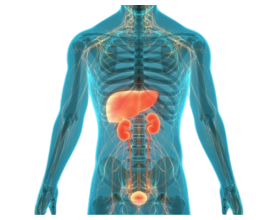
Your kidneys are one of the most important organs in your body. They power the entire nephrological system of your body and filter toxins from your blood. In short, if your kidneys are not working, your life expectancy will be drastically reduced. This is why, as you grow older, it is important to take care of your kidney health.
This is mainly because kidney health doesn’t come with symptoms at its earliest stages. When you get symptoms, it is usually already serious. So, how do you identify whether your kidneys are healthy or not? There are two ways to do it, one of which is to identify health markers, and the other relies on the medical diagnosis of your kidneys.
We’ll be discussing both ways in this blog, along with a detailed look at habits that can help you maintain healthy kidneys. But first, let’s understand why kidney health matters and how kidney health ties to your overall health.
Kidneys handle critical functions in the body by filtering waste out of the blood. It also:
From the points mentioned above, you can clearly see how kidney health is crucial for your health. It also shows how kidney health ties to your overall health. Here’s a detailed look at how kidney health ties into your overall health.
When your kidneys work well, it keeps the other systems in your body healthy, like:
Unchecked kidney problems can cause problems in these systems. Additionally, it can give rise to problems like chronic inflammation in the body. The worst part about kidney problems, such as chronic kidney disease (CKD), is that it doesn’t come with obvious symptoms. So, this is why it is important to be mindful of your kidney health, as it can otherwise impact your overall health negatively.
As mentioned previously, there are two ways to tell whether you have healthy kidneys or not. The subtle signs of healthy kidneys that you can monitor in your daily life do not negate the requirement of a medical diagnosis. However, it can help you maintain peace of mind and stay on top of your health. So, what are the everyday indicators of healthy kidneys? Let’s find out.
As an adult, you would know the appearance, colour, and smell of your urine, which is consistent. Some changes are normal due to factors like dehydration and diet changes. However, if your urine is consistently changing its colour, smell, and texture, it may be a sign of concern. Your urine should ideally be:
If your urine is becoming cloudy, smells very pungent, looks very dark persistently, or has traces of blood, these are serious signs of kidney problems. If you notice these patterns, you must contact a nephrologist in Delhi at the MASSH Super Speciality Hospital to find out the underlying cause of these symptoms.
You generally know the number of times you urinate in a day. Ideally, you should be urinating once every few hours, and you shouldn’t have to urinate in the middle of the night, disrupting your sleep. If this pattern disrupts, that may be a sign of underlying problems. Now, changes in your urination pattern don’t necessarily relate to kidney problems only; it could also be caused by other nephrological problems. So, what could altered urination patterns look like?
Altered urination patterns could mean:
These signs should not be ignored and should be reported to your nephrologist.
When your kidneys work properly, it removes excess fluid from your body. This helps in reducing inflammation in your body. If your kidneys are not functioning properly, you may experience inflammation in the following areas:
Temporary puffiness caused by sleep or sitting for a long period is different. Kidney problems can and will lead to persistent swelling that won’t go away, even with anti-inflammatory measures. This is all the more true for inflammation in your lower extremities. If you experience consistent inflammation in the areas mentioned, you must check with your nephrologist or even your primary care physician.
When you sleep well and have consistent energy levels throughout the day, that’s a sign that your kidneys are functioning properly. Even though there are numerous other reasons that can affect your sleep and energy levels, kidney health is a part of the reason why you may be experiencing poor sleep and energy levels.
When your kidneys are not functioning optimally, you may experience:
These negative effects are often caused by toxins building up in your body, which would be expelled from your body if your kidneys were functioning properly. So, this is a subtle but important indicator of kidney health that you shouldn’t ignore.
Healthy and clear skin is often linked to your kidneys. To put it simply, kidneys flush our toxins, and when your blood is free from waste, it shows on your skin. So, when your kidneys are functioning best, you will have naturally hydrated skin and experience minimal skin dryness or irritation. Again, dry skin and irritation can be caused by many factors, but kidney health is one of the reasons why they can be prevented or managed, even for people with dry skin.
When your kidneys are not functioning well, you may experience dry skin, especially in patches, itchiness across the body, and unexplained skin issues. This is how kidney health directly correlates to skin health, and why you should take these symptoms seriously.
If you have frequent muscle cramps, it could be due to your failing kidney health. Kidneys maintain the electrolyte and fluid balance in your body. It also manages the levels of sodium and potassium in your body. When these balances are stable, it indicates a properly functioning kidney. That relates to no muscle cramps out of the blue and muscles function normally.
If your kidneys are not doing well, you may experience sudden muscle cramps. It is generally indicative of electrolyte imbalance in the body and dehydration. Both of these reasons could be tied to your kidney health. So, you should take it seriously and take these symptoms to your doctor if they persist.
Every day signs of kidney health are good for understanding the overall health markers of your body. As mentioned previously, the symptoms can be caused by a number of factors, and without a medical diagnosis, it is not possible to determine whether your kidney problems are causing the symptoms mentioned previously.
So, here are the most common clinical kidney health diagnosis tests that are used to diagnose common kidney problems. If your test results are normal, that’s a foolproof way to know your kidneys are healthy.
The eGFR levels are used to detect how effectively your kidneys are filtering waste from your body. While the normal range of eGFR may vary based on gender and even laboratories, the general standard suggests anything over 90 is considered normal. If your test reports show results below 90, that would mean reduced kidney function.
This test report does not automatically mean kidney problems like chronic kidney disease, as there are numerous factors that can cause reduced kidney function. Additionally, the eGFR rate gradually decreases as you age. This is normal and expected. So, don’t panic based on one test result. If the results are abnormal, your nephrologist in Delhi will recommend more testing to understand the root causes.
Creatinine is a waste product that’s developed inside the body from muscle activity. When your kidneys are functioning optimally, this waste should be filtered out of your body. This is why, if your creatinine levels are unusually high, doctors suspect kidney problems. Much like eGFR, the normal range of creatinine differs based on gender, age, and muscle mass of the person.
So, it is important to understand the test result in the context of your overall health. Also, if you’re taking creatinine supplements, which have become increasingly common among gym-going individuals, it can artificially spike your test results. So, make sure you discuss your reports with your doctors to help your doctor diagnose and treat underlying conditions adequately.
The kidneys prevent your body from leaking important protein into the urine. This function is fulfilled by optimally performing kidneys. The presence of protein in urine would be a sign of the kidneys not functioning properly. In fact, in people with high blood pressure and diabetes, this would indicate kidney damage.
This is why it is very important for people with chronic illnesses to undergo the proteinuria test. Having little to no protein in urine is a sign that your kidneys are healthy and working as they should. If you do have chronic conditions and your doctors have not recommended this test for you so far, you can discuss its importance with your doctors as you age.
Kidneys regulate the levels of sodium, potassium, and calcium in your body. These are important minerals that have critical functions in your body. If these levels are improper, it could lead to muscle weakness or cramps, irregular heart rhythms, and fatigue that you can’t get over.
This is because sodium, potassium, and calcium levels define nerve function in your body, and long-term improper fluid levels can cause serious neural damage to your body. Properly functioning kidneys can prevent electrolyte imbalances and can help you maintain overall health.
Healthy kidneys can help you maintain great overall health, which is why you should take the time to incorporate lifestyle and dietary habits that can help you maintain kidney health. Here are six daily habits that can significantly improve your kidney health.
The signs of healthy kidneys are important health markers, and you should monitor them regularly as you age. It is also important not to panic regarding any marker going off, and rather to get the medical supervision you require at such times. nephrologists in Delhi can help you understand the underlying health conditions that are related to your kidneys and treat them accordingly.
For the best nephrological care in Delhi, visit the MASSH Super Speciality Hospital. Our specialists are highly qualified and experienced in managing kidney problems with minimally invasive surgical treatments. For more information, set up a consultation with our specialists today.
MASSH Super Speciality Hospital Nephrology Team
Our highly experienced nephrologists have expertise in advanced treatment options for kidney problems, including specialised minimally invasive surgical treatments like ureteroscopy, retrograde intrarenal surgery, and percutaneous nephrolithotomy. Treatments are often accompanied by lifestyle and metabolic guidelines for long-term sustainable nephrological health.
Your urine should be pale yellow or colourless to indicate healthy kidneys. If you continuously notice that your urine is dark or has a brownish colour, it indicates problems with your kidneys or urological tract and requires swift medical attention.
A healthy person should urinate once every few hours based on the amount of water they’re drinking daily. Also, a healthy person should not have to wake up in the middle of the night to urinate commonly. These are the two urinary frequency markers that you should notice to understand whether your kidneys are functioning properly or not.
Yes, it is possible to have kidney disease without symptoms. In its early stages, chronic kidney disease does not show symptoms, which makes it harder to detect without a proper medical diagnosis. The markers shared in this blog can help you identify the early signs of kidney damage, which you can use to get a medical diagnosis.
The fastest way to improve kidney health is to start drinking more water every day and quitting habits like smoking and drinking alcohol. These are the two most important ways to improve kidney health in people.
The frequency of kidney function tests is determined by your urologist or primary care physician based on your symptoms, age, gender, and risk of kidney disease. In general, the test should be conducted at least once a year as you age.
This blog is intended for educational and informational purposes only. It should not be considered a substitute for professional medical advice, diagnosis, or treatment. Always consult a qualified urologist in Delhi for proper evaluation and treatment recommendations.
Watch out for early signs of liver and kidney damage like fatigue, swelling, or dark urine. Early detection can help prevent serious health issue...
Written by MASSH
Jun 25, 2025
To help you prevent kidney cancer, let’s study the critical kidney cancer risk factors, and how an early diagnosis can help you with kidney cance...
Written by MASSH
Oct 30, 2024
Some of the common kidney cancer symptoms are flank pain and blood in your urine. Kidney cancer treatment involves chemotherapy, radiation therap...
Written by MASSH
Feb 22, 2024




 Quick Enquiry
  Call(24*7)
  Whatsapp