Written by MASSH
Dec 24, 2025
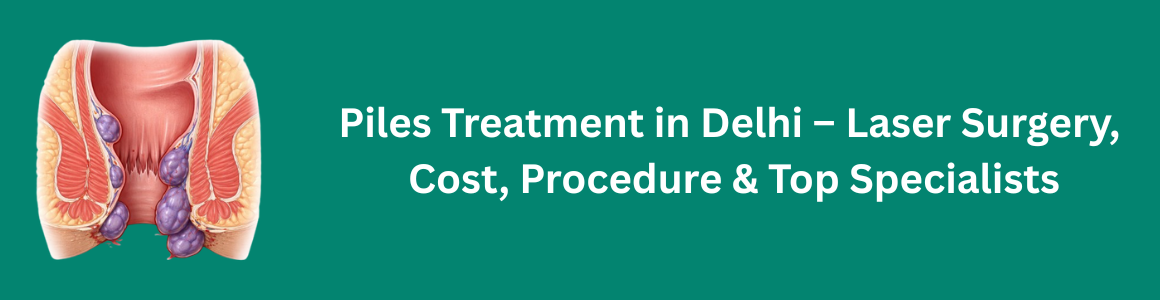
It is possible and easy to get Piles treatment in Delhi with surgical intervention. Top medical institutions like MASSH can offer highly specialised and safe surgical treatment that can offer a more permanent treatment for haemorrhoids or piles than symptomatic medicinal treatment. Piles are caused when veins or tissue swell or become inflamed in or around the anus or rectum.
It is a very common medical problem that affects almost one-third of the entire Indian population at some time. Generally, piles can be treated with home remedies; however, in complex cases, surgical intervention is the safest and most long-term treatment option. So, let’s explore the various piles types and piles treatment options in Delhi. We’ll also discuss the cost of laser surgery in Delhi, as well as the best specialists to get the surgery from at MASSH.
Piles or haemorrhoids are caused by veins or tissue swelling in or around the anus. The inflammation can be caused by a number of factors, and they cause crucial symptoms such as:
The primary causes of piles range from lifestyle and dietary factors. Generally, haemorrhoids are caused when there’s additional pressure on the veins in or around your anus. This pressure is caused due to factors like a sedentary lifestyle, low-fibre diets, and constipation that’s caused by the two factors mentioned.
If you have to strain during bowel movements very regularly, it increases your risk of haemorrhoids. Other non-medical reasons, like aging, pregnancy, and obesity, can also contribute to piles risk.
No matter the symptoms or the underlying cause of piles, it is important to note that piles are easily treatable with the right and timely medical intervention. To understand your treatment options, let’s first understand how piles can be graded in different categories. This categorisation helps you understand your treatment options better.
There are primarily two types of piles, which are then graded into categories to assess the condition’s severity. The two types of Piles are internal and external haemorrhoids. Here’s a detailed look at both and their grading categories.
Internal piles are located in the rectum and not in the anus. They can be painless generally; however, they cause bright red bleeding during stool passing. If internal piles grow too large, they can prolapse or protrude out of the anus during straining. In such cases, the protrusion can be pushed back inside again. Here are the category grades of internal piles.
External piles, as the name suggests, develop around the opening of the anus. These types of haemorrhoids are more symptomatic and cause pain, discomfort, itching, and swelling in the region. As these piles are visible externally, they do not require categorical grading. At every size, these piles cause symptoms, which can degrade the quality of life and cause pain.
As a result, external piles require immediate treatment. In some cases, external piles can even be caused by blood clots that occur in swollen haemorrhoidal tissues. This type of external piles is marked by severe pain and inflammation in the region.
As the name suggests, this type of piles is caused when the patient has both internal and external piles. Combination piles require medical treatment, like laser surgery, to be treated.
Surgery is one of the only permanent treatment options for piles. For internal piles in the 3rd and 4th grade, surgery can allow the removal of haemorrhoidal tissues and permanently treat the problem. Similarly, surgery is also required when lifestyle changes and dietary treatments are not working anymore. Here are some of the most common symptoms that will require surgical intervention, if present.
It is crucial to note that surgery is important, not when you have the symptoms mentioned above, but when you have identified the problem. Early intervention can help you get an easier surgery with a lower recovery period. This way, you can also prevent complications that come with complex internal, combination, and external piles.
Generally, doctors recommend a surgical treatment option for piles in Delhi as a permanent treatment for piles in Delhi. Surgeons are introduced to your medical team at that point, and they study your case and decide which surgery is best suited to help you. There are two types of surgery generally recommended for piles, conventional haemorrhoidectomy and laser haemorrhoidectomy. Here’s a detailed overview of both.
Laser surgery for Piles, also known as laser haemorrhoidectomy, is a minimally invasive surgical treatment for piles. It is a very precise surgery that’s performed laparoscopically using a powerful and precise laser that shrinks and seals swollen haemorrhoidal tissue from within. This surgery does not damage surrounding structures or muscles.
As a minimally invasive procedure, the lower tissue damage directly equates to a faster recovery time for patients. In fact, the laser coagulates the blood supply to the piles, which leads to size reduction and resolution of the haemorrhoids.
Key Benefits
It is important to note that a laser haemorrhoidectomy is not suited for every case. Here is a brief look at the cases where laser piles surgery can successfully intervene.
Higher-grade internal piles and external piles are not generally recommended for treatment using laser piles surgery. This is why it is important to opt for treatment soon when you notice the symptoms. It can help you go through the laser surgery, which is faster, safer, and has a quicker recovery period.
Minimally Invasive Procedure for Haemorrhoids (MIPH) is also known as stapled haemorrhoidopexy. It is a stapler-based surgery that’s specifically suited for advanced internal piles that are in grade 3 or 4. As a minimally invasive procedure, it offers a shorter recovery period and is generally safer than open surgery. However, it has a longer recovery period than laser piles surgery.
MIPH differs from laser piles surgery because it doesn’t target the piles directly. The MIPH surgery is performed by repositioning the prolapsed haemorrhoidal tissue. The prolapsed tissue is brought back into its correct anatomical position, and the excess tissue is cut off. The blood supply to the prolapsed tissue is also cut off, which causes the piles to be permanently treated.
Even though the laser surgery is known for being largely painless, MIPH also offers similar advantages. Since the surgery is only recommended for patients with advanced internal piles, the surgery is performed above the pain-sensitive area of the anal canal. As a result, the post-operative discomfort of MIPH is also significantly lower compared to traditional open surgery.
It is important to note that not only does MIPH have key benefits as a minimally invasive procedure, but it can also be an absolutely crucial surgical treatment in some cases, such as:
The best piles specialist in Delhi must have the following qualifications:
With the right surgical expertise and post-surgical care, you can recover within 14 days and get back to your life. MASSH, as the leading minimally invasive surgery destination in Delhi, can help you get world-class treatment. We are led by experienced laparoscopic surgeons like Dr Sachin Ambekar, along with state-of-the-art surgical infrastructure, including but not limited to 3D laparoscopic surgical suites and advanced imaging solutions. Lastly, as a multispecialty hospital, MASSH offers detailed pre- and post-surgical care without hospitalisation to help you improve surgical outcomes and expedite recovery. Set up an appointment with our specialists today to learn more.
1. Is laser surgery for piles permanent?
Yes, laser surgery is used for treating internal piles. However, only early-stage internal piles, such as grades 1 and 2, are best treated using laser piles surgery.
2. Is piles laser surgery painful?
No, laser piles surgery is largely painless, and since it is minimally invasive, there is also minimal pain during the recovery period.
3. Which is better: laser or MIPH?
Laser surgery and MIPH are used to treat different types of piles. Laser surgery is best suited to treat early-stage internal piles, while MIPH is best suited to treat advanced internal piles, generally associated with grades 3 and 4.
4. How long does piles surgery take?
Piles surgery can take as little as a few hours. With hospitalisation, most patients are discharged within 48 hours, with some patients even being discharged on the same day of the surgery.
5. Can piles come back after surgery?
Yes, it is possible for piles to recur after surgery. However, it is caused by dietary and lifestyle causes and not due to surgical improprieties.
Get guidance on piles treatment in Delhi—know early signs, causes, and when to consult a doctor for timely, effective relief.
Written by MASSH
Nov 26, 2025
Get advanced fistula treatment in Delhi with the latest laser surgery options. Quick recovery, minimal pain, and expert care by experienced surge...
Written by MASSH
Nov 06, 2025
Experience painless and effective laser fistula treatment in Delhi at MASSH Hospital. Advanced care, minimal discomfort, and faster recovery.
Written by MASSH
Oct 14, 2025




 Quick Enquiry
  Call(24*7)